Happy New Year?! I know, you probably thought the ball drop is still three and a half months out, and you are right. But this is not the new year of the parties and dancing in Time Square. Instead, we are talking about the Jewish New Year: Rosh Hashanah, which translates to “first of the year” or “head of the year” will launch the Jewish year 5786.
In the year 2025, Rosh Hashanah begins at sundown on Monday, September 22 and concludes at sunset on September 24, and the holy day ushers in 22 days of other holidays stacked on top of one another.
Where does this holiday come from? After the Exodus from Egypt, in Leviticus 23:23-25:
23 And the Lord spoke to Moses, saying, 24 “Speak to the people of Israel, saying, In the seventh month, on the first day of the month, you shall observe a day of solemn rest, a memorial proclaimed with blast of trumpets, a holy convocation. 25 You shall not do any ordinary work, and you shall present a food offering to the Lord.”
Literally, this holy day was to be the Remembrance of the Trumpet blasts. The shofar, or trumpet appears throughout Scripture to provide a warning, lead the people into battle, celebrate a victory, or announce the coming of a King.
When this command was given, the Israelites had recently had an encounter with trumpets. Exodus 19 recounts that trumpet blasts called the people to the foot of Mt. Sinai, and they trembled when they heard it. Moses went up to Mt. Sinai, and returned to the people with the 10 Commandments. Remembering the trumpet blasts is a call not just to some individual self-actualization, but to a heart evaluation according to the Commandments.
Why do we have a New Year on the seventh month? Tevye the milkman would say, “I’ll tell you…I don’t know.” But we know, that’s where God put it. The Torah, the first 5 books of Moses carries the theme of rest around a series of 7’s. God completed the creation and did not work on the 7th day. The Israelites were to follow His instruction to rest on the 7th day of the week. Slaves were to be set free on the 7th year, and the land was to rest for a Sabbath year. After seven sevens of years (49), the 50th year was to be a grand year of Jubilee. So, a special significance for the seventh month makes sense.
Prior to the destruction of the Temple, in order to commence this holy day, the new moon had to be seen observed by two witnesses, and reported to the Sanhedrin in Jerusalem. The Temple Institute, a non-profit Jewish organization dedicated to rebuilding the Temple in Jerusalem writes about the process of identifying the new moon:
Two witnesses who had seen the appearance of the new moon were required to testify before the Great Sanhedrin, which convened in the Chamber of Hewn Stone, which was located on the northern wall of the Inner Courtyard of the Holy Temple. There they would be questioned and cross examined to verify their fitness as witnesses, and the truth of their words.
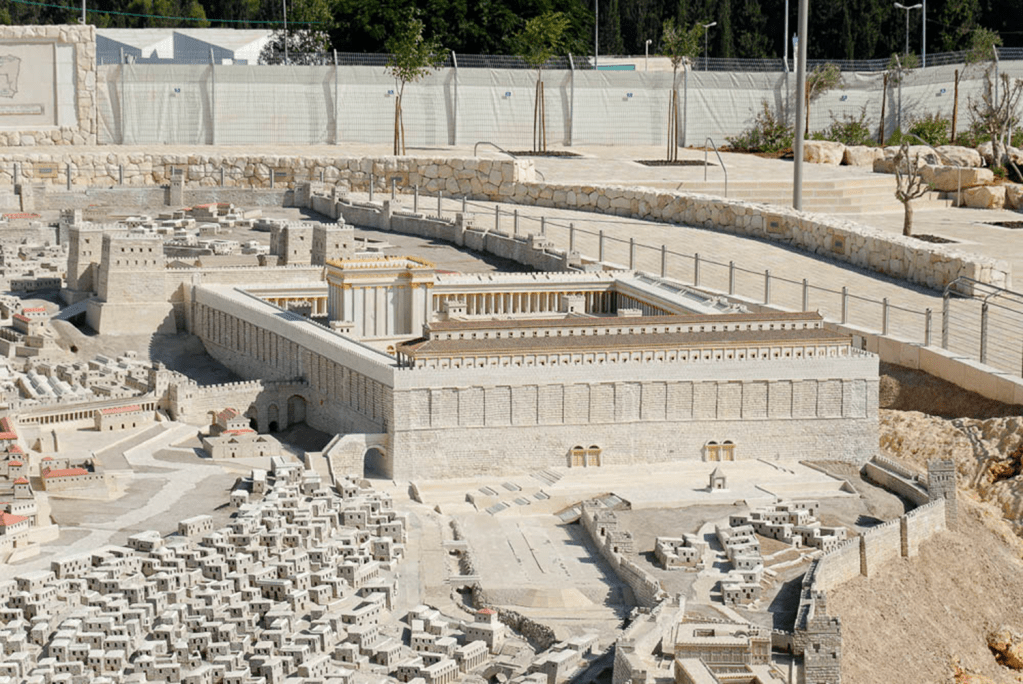
What is this holy day all about? God told His people that this was to be a solemn memorial. Today, especially among religious Jews, the focus is on self-reflection and confession. Good works, are also encouraged. Two weeks later, Yom Kippur, the Day of Atonement will be observed.
Some rabbinic commentators believe that Rosh Hashanah also commemorates the creation of man by God. The Machzor, a liturgical prayer book for the High Holy days suggests that Rash Hashanah is “Hayom Harat Olam,” the day of the world’s birth. (You may have wondered where the year 5786 comes from This is the rabbis’ reconning of the number of years from the creation of the world to today.) God, the Creator, is also celebrated as King of the universe during these days. He is recognized as the One who gives to life to all.
How do religiously observant Jewish people practice Rosh Hashanah? Whereas you might think of dance bands and festive parties of December 31, Rosh Hashanah services are meant to focus on sin and judgement. Even as individuals are encouraged toward self-reflection, synagogue communities and families fulfil the command together in various ways.
During the month of Elul, preceding Rosh Hashanah, some people may practice a “mitzvah” (a good work) connected with the holy day by blowing a shofar in public, in the streets, or in front of a synagogue. Those who hear the trumpet are meant to begin preparing for the reflection commanded during the holiday.

The community gathers during the two-day period for sermons at the synagogue (shul), prayer services, and times of reflection, all punctuated by blasts of the shofar. One prayer that is often sung is “Avinu Malkeinu” “Our Father, Our King.” You can watch a gorgeous choir arrangement here.
Our Father, our King, we have sinned before You.
Our Father, our King, we have no King but You.
Our Father, our King, act [benevolently] with us for the sake of Your Name.
Our Father, our King, renew for us (on fast days: bless us with) a good year.
Our Father, our King, a good year.
The Torah portions assigned to be read during these holy days come from Genesis 21 and 22, the miraculous birth and redemption of Isaac by the provision of the ram in the thicket. Other readings include Deuteronomy 29:9-14, Isaiah 55:1-13, and 1 Samuel 1:1-2:10. Each passage speaks of God’s promised redemption and the call for Israel to return to God.
Family celebrations of Rosh Hashanah often revolve around a table covered symbolic foods. For example, a fish head on the table reminds the family that they are “heading” into a new year. Black-eyed peas, beef brisket, and kugels are often served. Pomegranates appear everywhere. Apples are dipped in honey as the family wishes each other a sweet year.
The formal greeting that is offered is “L’Shana Tova Tiktevu.” “May you be written for a good year.” Informally, the greeting is “’Shana Tova.”

You may wonder, what does it mean to be “written?” We will answer that more fully when we discuss Yom Kippur, the Day of Atonement, in the next post in this series. Essentially, all of the reflection, all of the concentration of sin and repentance on Rosh Hashanah becomes laser focused on Yom Kippur. The rabbis say that books are opened in heaven, and for sure, you want to be written in the book of Life!
For those who are readers of the New Testament, you may be wondering, “Is Rosh Hashanah ever mentioned in the New Testament?’ The answer is No. . . and maybe, yes. Christians do anticipate that trumpets will herald Jesus’ return to earth (1 Thessalonians 4:16, 1 Corinthians 15:52), but Rosh Hashanah is not specifically mentioned.
And the “maybe, yes” part? I believe the Remembrance of Trumpets does show up, but as an unnamed feast. To be clear, some scholars believe this feast to be another Passover. Take a look at John 5. Jesus goes to Jerusalem to “a feast of the Jews.” And look at what happens.
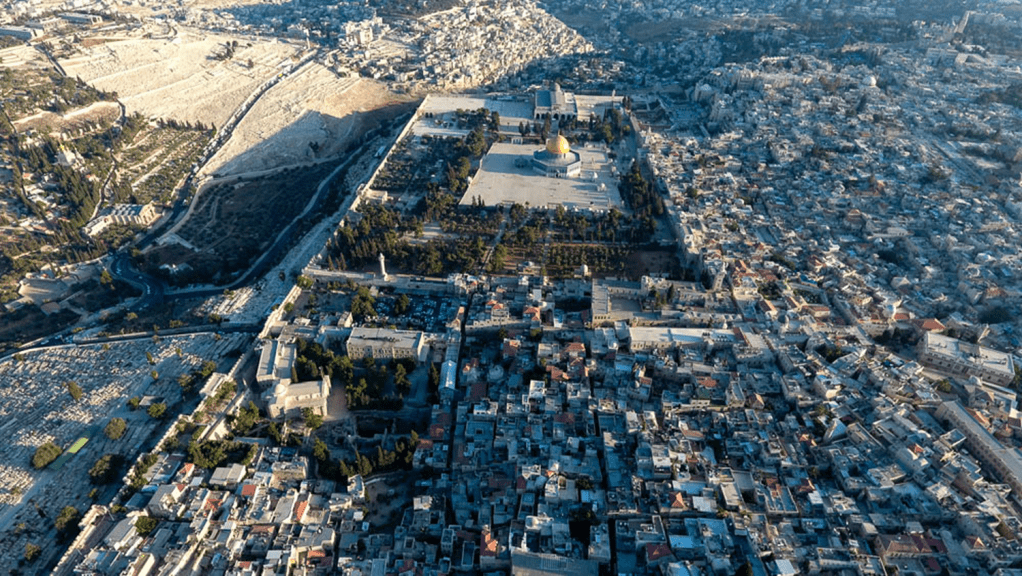
First, at the feast, Jesus heals a man on the Sabbath. When he was challenged by the leaders for this action, Jesus responded, “My father is working until now, and I am working” (John 5:17). The chapter goes on to tell us that “The Jews were seeking all the more to kill him, because not only was he breaking the Sabbath, but he was even calling God his own Father, making himself equal with God” (John 5:18). The Jewish leaders of His day understood that Jesus was claiming to be God. Let’s be clear, Jesus was claiming to be the Messiah.
In His continuing response to them, Jesus picks up the themes of death and life, of judgment and resurrection. (John 5:19-29). Jesus tells the rulers that they should be able to see who He is, and challenges them to examine the four witnesses who testify of Him: John the Baptist, the Father, the Scriptures, and Moses. Does that sound familiar? Jesus doesn’t offer two witnesses to commence His Messianic ministry, but four.

While we may not agree on the identity of Jesus, Jewish people and Jesus-Followers can agree on a a number of elements of this holy day. As we hear the Trumpet blasts, may they serve as a warning and a memorial for the work God has already done. May we be reminded to examine our hearts, to recognize our inability to follow the Law of God without His help. May we all look to the Messiah and the redemption only He can bring. May we ask God for His wisdom and follow Him all the days of our lives.
Blow the trumpet in Zion;
consecrate a fast;
call a solemn assembly;
gather the people.
Consecrate the congregation;
assemble the elders;
gather the children,
even nursing infants.
Let the bridegroom leave his room,
and the bride her chamber. Joel 2:15-16
Resources
- Understanding Jewish Holidays: Remember to Remember
- This sermon from my friend, Meno, pastor of Jerusalem Assembly.
- How the Shofar is made.
- BiblePlaces.com, the source of all the best photos and maps related to the Scriptures.
- Rosh Hashanah recipes from the Jewish Food Society.
- The Outpouring by Elwood McQuaid is a fascinating look at the Feasts in the Gospel of John, including suggesting Trumpets in John 5.
 Lisa LaGeorge
[…] to remember. This is God’s instruction to His people. Whether Yom Kippur or Rosh Hashanah or even Hanukkah, each of these holidays reminds the people what He has done. While those holidays […]
LikeLike
[…] can find more on Jewish holidays here and Rosh Hashanah here. Next up: […]
LikeLike
[…] The first holiday we will look at is Rosh Hashanah, the Head of the Year, which begins at sundown on September 22nd. Stay tuned for more in the next few days. And in the meantime, you might want to find some apples and honey. . . […]
LikeLike